H3VR2 game engine: How VR Simulation Comes Alive
Explore the H3VR2 game engine systems, including procedural levels, realistic firearms, hand tracking, AI, and Quest optimization.
Why the H3VR2 game engine matters
The H3VR2 game engine is being pushed to do something that once seemed impractical on a standalone headset: deliver detailed firearms, believable physical interactions, procedural exploration, and enemy AI in VR. That matters because H3VR2 is not simply moving the original PC sandbox to new hardware—the H3VR2 game engine must support a roguelike facility mode while running on the mobile hardware inside Meta Quest 3 and Quest 3S.
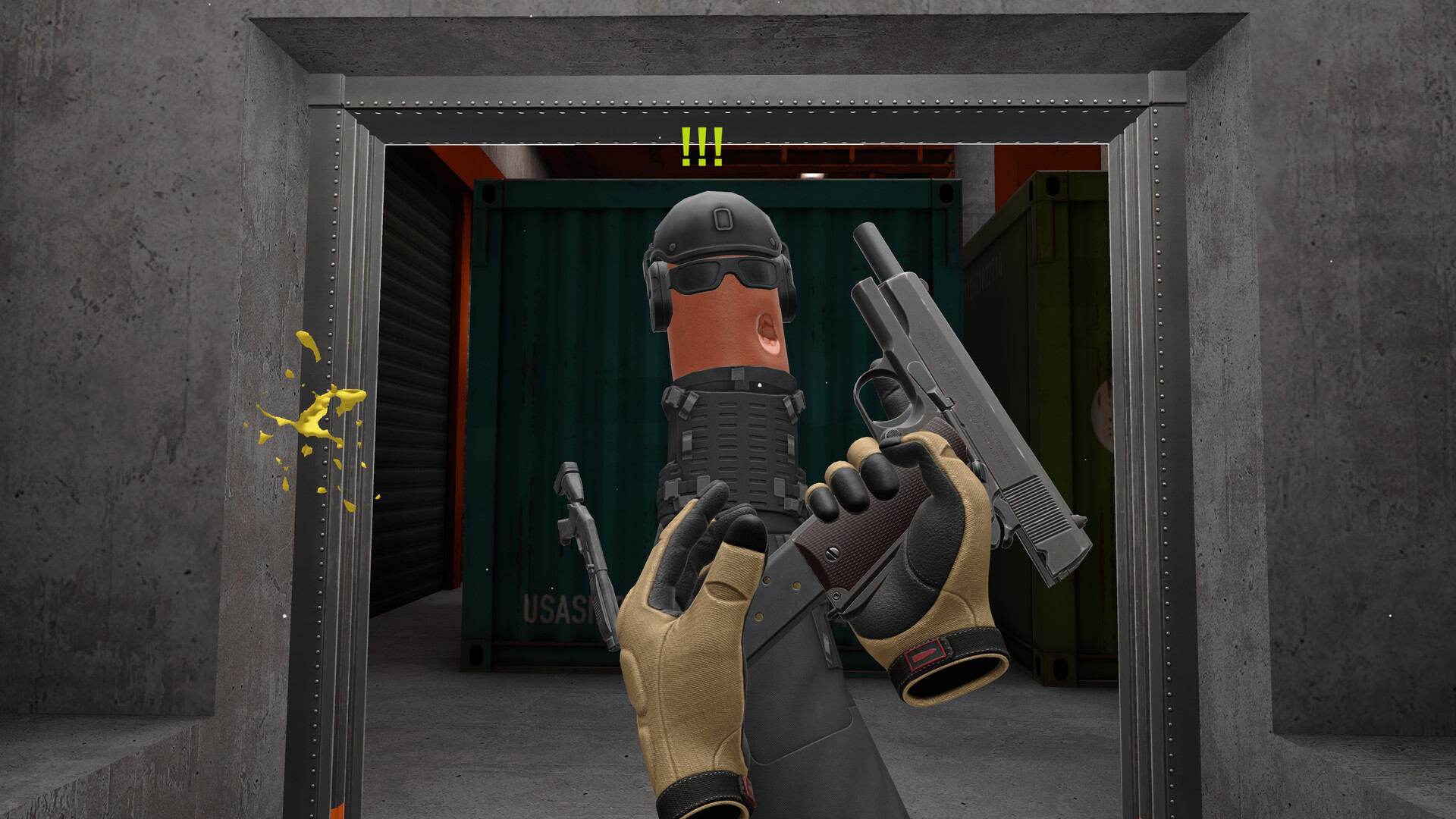
Official screenshot · Source: Steam store
H3VR2 launched on Quest 3 and 3S on November 12, 2026, for $39.99. Its PC VR edition is planned for the second half of 2027, giving the development team more time to complete the PC version and its modding framework.
Public development information does not identify a specific commercial engine by name. Instead, the available details reveal the major technology systems that make the sequel work. Those systems include procedural generation, a player controller, hand interactions, firearm simulation, next-generation Sosig visuals, and Sosig AI.
What the H3VR2 game engine is designed to handle
The first Hot Dogs, Horseshoes & Hand Grenades became known for unusually detailed VR weapon handling. The sequel keeps that focus but expands it into a larger, more structured experience. The central Facility mode combines exploration, combat, loot management, extraction, and long-term progression.
A useful way to understand the technology is to separate the game into interconnected layers:
| Engine system | What it does | Why it matters in VR |
|---|---|---|
| Procedural level generator | Builds Facility layouts and routes | Keeps repeated runs unpredictable |
| Player character controller | Handles movement and physical presence | Makes locomotion feel stable and responsive |
| Hand interaction system | Supports grabbing, manipulating, and using objects | Enables natural weapon handling |
| Firearm simulation | Models guns, ammunition, attachments, and operation | Preserves the series’ core identity |
| Sosig rendering | Creates the game’s enemy visuals | Delivers readable characters on mobile hardware |
| Sosig AI | Controls enemy behavior and combat decisions | Makes encounters more dynamic |
| Asset management tools | Organizes game content and future additions | Supports updates and planned modding |
This architecture is particularly important because VR games cannot hide interaction problems behind traditional button inputs. A player can pick up a pistol, adjust an attachment, reload it, aim down the sights, and fire. Each action needs to feel coherent from the player’s perspective.
The development team has also described a custom, mod-friendly asset manager. That is not the same thing as a completed modding kit, but it suggests that the project is being built with future content expansion in mind.
Procedural Facility mode and replayability
Facility is the sequel’s main game mode and an evolution of H3VR’s Take and Hold format. Players enter a procedurally generated megastructure, fight armed Sosigs, collect equipment, and try to extract with valuable loot. Successful runs can improve the player’s available gear and prepare them for deeper attempts.
Procedural generation does more than rearrange rooms. For it to be useful in a VR extraction roguelike, it needs to create spaces that are navigable, readable, and fair. Players must be able to understand where they are, identify threats, and make decisions without feeling that the game created an impossible encounter.
| Facility feature | Player decision | Practical consequence |
|---|---|---|
| Randomized routes | Choose a safer or more rewarding path | Risk and reward become part of navigation |
| Loot weight | Decide what to carry or leave behind | Inventory management affects extraction |
| Enemy encounters | Fight, reposition, or avoid threats | Ammunition and health become strategic resources |
| Extraction objective | Leave with current rewards or continue | Greed can increase potential losses |
| Armory spending | Improve equipment between runs | Progression changes future loadouts |
| Biome structure | Learn environmental patterns over time | Experience improves route planning |
Because the levels are generated rather than fixed, players should approach Facility with a flexible plan. A reliable starting strategy is to learn the weapon and movement systems in the Certification Range before attempting long runs. Then, during early Facility attempts, prioritize extraction over maximum loot. Understanding how the game handles carrying capacity, enemy detection, and retreating is more valuable than immediately chasing the best reward.
The development roadmap also points toward ongoing expansion. The team has discussed adding two new Facility biomes per year, alongside regular weapon and tool updates. These additions should give the procedural systems more environments and encounter possibilities to work with.
Firearm simulation and physical interaction
Firearm handling remains the centerpiece of the H3VR2 experience. The sequel’s systems are designed around physical manipulation rather than treating a weapon as a simple animated object. Players interact with slides, magazines, sights, grips, rail adapters, and other components through their VR hands.
That level of detail creates a demanding engineering problem. Every object must respond correctly when grabbed, released, collided with, or attached to another object. The interaction system also needs to account for two-handed handling, player movement, collision behavior, and the limitations of tracking hardware.
| Interaction | What players should practice | Why it helps |
|---|---|---|
| Grabbing a weapon | Use consistent hand positions | Reduces fumbling during combat |
| Reloading | Rehearse magazine and charging-handle motions | Builds muscle memory |
| Attaching accessories | Learn the attachment interface at a safe bench | Prevents setup delays during a run |
| Using cover | Keep hands and muzzle clear of nearby geometry | Avoids awkward collisions |
| Switching weapons | Place backup equipment in predictable locations | Improves response time |
| Clearing mistakes | Slow down instead of forcing inputs | Helps identify interaction errors |
The game’s detailed weapon customization also gives players meaningful preparation choices. A larger optic, alternative grip, or different rail setup may improve one part of a loadout while making another less convenient. In a game where inventory space and weight matter, customization is not only cosmetic.
Players should spend time in the Certification Range testing one weapon at a time. Check how it reloads, where its controls are located, and how attachments affect handling. This is more efficient than learning a new platform while being pursued inside Facility.
Slow-motion functionality adds another layer to combat and practice. It can help players analyze a difficult encounter, create a short window for a deliberate reload, or understand how enemies react. However, relying on it for every engagement may reduce the importance of positioning and preparation.
Sosig AI, visuals, and Quest performance
The H3VR2 game engine also has to balance visual clarity with standalone performance. Quest 3 and Quest 3S use mobile hardware, so the sequel cannot simply assume the same processing budget as a high-end gaming PC.
The project’s technical work includes next-generation Sosig visuals and new Sosig AI. These two systems are closely connected. Enemies must be visually readable in a headset while also responding convincingly to player actions. Clear silhouettes, recognizable equipment, and understandable movement are especially important when a player is processing threats in real time.
The team’s experience with mobile VR optimization is a major part of the Quest release. The result is notable because the original H3VR was built around PC VR and never received a standalone version. H3VR2 therefore represents a substantial technical shift rather than a simple platform conversion.
| Platform or milestone | Status | What it means |
|---|---|---|
| Meta Quest 3 | Released November 12, 2026 | Main standalone launch platform |
| Meta Quest 3S | Released November 12, 2026 | Lower-cost standalone option |
| PC VR | Planned for second half of 2027 | More development time for the PC edition |
| Steam listing | Wishlist/availability information subject to change | PC timing is not an immediate launch |
| Modding framework | Planned for the PC version | Tools are intended to be ready before PC release |
Performance optimization affects almost every part of the game. Enemy counts, lighting, physics calculations, animation, level streaming, and object interaction all compete for limited resources. A successful standalone build must make careful decisions about what is simulated continuously and what can be simplified without damaging the experience.
For players, the practical lesson is simple: keep the play area clear, maintain good headset tracking, and use the game’s comfort and movement settings deliberately. Stable tracking makes physical interaction feel more reliable, especially when handling weapons or reaching for equipment.
How the engine supports future updates
The H3VR2 game engine is being built for a longer content cycle than a traditional single-player release. The developers have described the project as a single-player “pseudo-live service” model, with free additions such as new guns, tools, Sosigs, and Facility content. New modes, sandbox packs, and licensed collaborations may be offered as paid DLC.
That structure places pressure on the game’s underlying tools. New content must be added without breaking existing systems, and developers need a consistent way to manage assets, behaviors, weapons, and environments. The custom asset manager mentioned during development may help organize this process.
| Planned content direction | Expected value for players | What to watch |
|---|---|---|
| New firearms | Expands loadout variety | Handling differences and attachment support |
| New tools | Creates additional tactical options | Whether tools matter outside specific scenarios |
| New Sosigs | Adds enemy variety | Distinct behaviors and readable threats |
| New Facility biomes | Extends exploration | Biome-specific hazards and route design |
| New modes | Broadens the game beyond Facility | Whether modes complement or distract from the core loop |
| Modding framework | Encourages community content | PC launch timing and documentation quality |
The planned modding framework is especially significant for the PC version. The developers have indicated that it needs to be completed properly before that edition launches. This approach may delay PC availability, but it also suggests that mod support is being treated as a foundational feature rather than a rushed post-launch experiment.
Community reports and player experience will eventually provide the best information about how well these systems perform in different conditions. Early impressions can reveal issues involving tracking, comfort, loading, AI behavior, or weapon interaction that are difficult to judge from trailers alone. Those reports should be treated as user experience rather than universal technical measurements.
Getting the most from the H3VR2 systems
New players can make the most of the H3VR2 game engine by learning its systems in a deliberate order. The game offers several types of content, including the Certification Range, arcade-style shooting, sandbox activities, and Facility.
| Recommended order | Activity | Goal |
|---|---|---|
| 1 | Certification Range | Learn basic weapon operation |
| 2 | Sandbox | Test interactions without pressure |
| 3 | Short Facility run | Practice navigation and extraction |
| 4 | Loadout customization | Build a dependable kit |
| 5 | Longer Facility attempt | Apply resource and route planning |
| 6 | Advanced experimentation | Explore unusual weapons and tactics |
Use these tips during your first sessions:
- Learn one primary weapon thoroughly. Familiarity is more useful than carrying several weapons you cannot operate quickly.
- Test attachments before committing to a run. Small changes to optics, grips, or rail equipment can affect your handling preferences.
- Treat extraction as a success condition. A modest haul that reaches the extraction point is usually more valuable than an ambitious run that ends empty-handed.
- Track your inventory weight. Carrying too much can limit flexibility and make difficult decisions unavoidable later.
- Use cover and positioning. Realistic weapon interaction does not replace basic combat fundamentals.
- Experiment in a safe mode first. The sandbox and Certification Range reduce the cost of learning unfamiliar mechanics.
- Keep an eye on updates. New biomes, equipment, and enemy content may change effective strategies over time.
For official announcements, platform details, and current availability, visit the official H3VR2 website. The PC schedule and modding plans may evolve as development continues.
FAQ about the H3VR2 game engine
What engine does H3VR2 use?
The publicly available development information does not name a specific commercial engine for H3VR2. Instead, the developers have discussed the game’s major technology systems, including procedural generation, physical hand interactions, firearm simulation, Sosig visuals, and AI.
Is the H3VR2 game engine built for standalone VR?
Yes, the game has been optimized to run on Meta Quest 3 and Quest 3S. That requires careful management of mobile performance while preserving the detailed interactions and physics-focused design associated with the series.
Does H3VR2 support procedural generation?
Yes. The Facility mode uses procedural level generation to create changing routes and encounters. The goal is to support replayable extraction-focused runs rather than provide one fixed campaign path.
Will the H3VR2 game engine support mods?
A modding framework is planned for the PC version. The developers have indicated that it should be ready before PC launch, which is currently planned for the second half of 2027.
Related Guides
H3VR2 coop: What Multiplayer Players Need to Know
Wondering about H3VR2 coop? Here is what is confirmed, what remains unknown, and how the extraction mode could shape future multiplayer.
H3VR2 facility: What to Know Before Your First Run
Learn how the H3VR2 facility mode works, including extraction, progression, weapons, loot, difficulty, and practical tips for surviving each run.
H3VR2 multiplayer: What Players Need to Know
Is H3VR2 multiplayer? Learn the confirmed single-player status, available modes, future possibilities, and how to get the most from solo Facility runs.
H3VR2 announcement: New Guns and Extraction Gameplay
The H3VR2 announcement reveals a new VR shooting adventure with procedural missions, extraction gameplay, deeper gun handling, and more.
H3VR2 meta store: Quest 3 Buying and Gameplay Guide
Learn where to buy H3VR2 on the Meta Store, what Quest headsets support it, and how its extraction shooter gameplay works.