H3VR2 facility: What to Know Before Your First Run
Learn how the H3VR2 facility mode works, including extraction, progression, weapons, loot, difficulty, and practical tips for surviving each run.
Why the H3VR2 facility mode matters
The H3VR2 facility is more than a shooting gallery: it is the game’s central extraction-style campaign, built around planning, realistic weapon handling, scavenging, and repeated attempts. For players who want a VR game with a long skill curve, the H3VR2 facility offers a rare combination of tactical stealth, immersive simulation, and persistent progression.
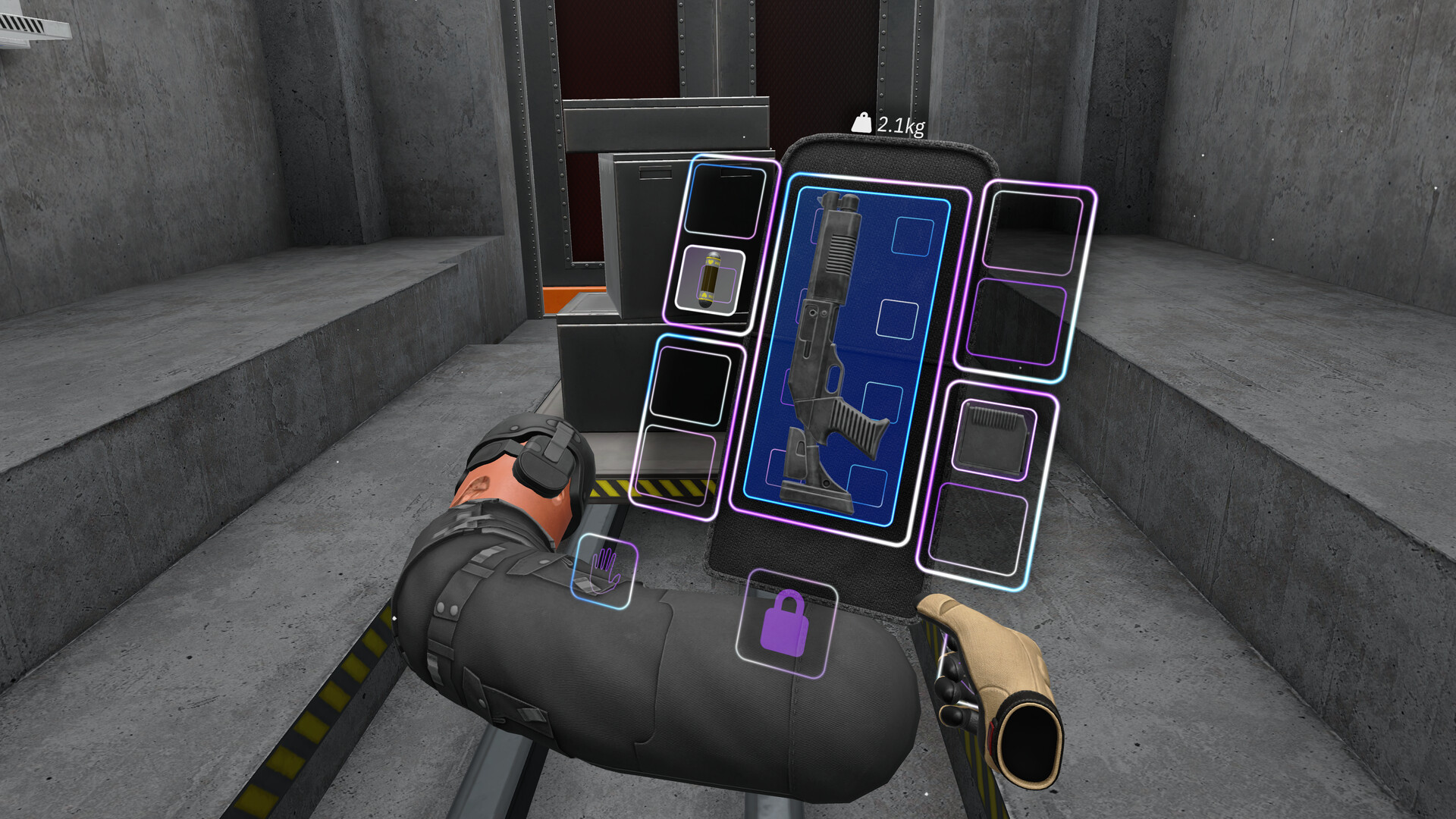
Official screenshot · Source: Steam store
You enter a procedurally generated megastructure as The Handy, fight armed Sosigs, collect useful resources, and attempt to extract your haul. Every run can improve your equipment or teach you something valuable, even when the final room ends with your character respawning back at the hub.
The mode is available at launch on Quest for $39.99. A PC VR version is planned for the second half of 2027, according to the game’s announced release schedule. You can check the latest platform information through the H3VR2 listing on Steam.
How a facility run works
The basic loop is easy to understand but difficult to master. You prepare in the hub, deploy into a generated level, manage your equipment under pressure, and return with whatever resources you successfully extract.
At launch, the campaign contains five levels. Each level uses a distinct procedurally generated map, meaning the exact room layout, enemy placement, and route through the environment can change between attempts.
| Stage of a run | What you do | Why it matters |
|---|---|---|
| Prepare | Select weapons, ammunition, tools, and capacity upgrades | Your starting loadout determines your options |
| Deploy | Enter the current facility level | You begin with limited information and resources |
| Explore | Search rooms, corridors, containers, and enemy areas | Loot can improve future runs |
| Fight or avoid | Engage Sosigs or move around them | Ammunition and health are limited |
| Extract | Load resources into your pod and escape | Anything left behind may be lost |
| Upgrade | Spend or recycle what you brought home | Better preparation improves later attempts |
The most important decision is not always whether you can win a firefight. It is whether the fight is worth the ammunition, noise, time, and exposure it creates. The H3VR2 facility rewards players who recognize when to move, hide, listen, or retreat.
That structure gives the game a deliberate rhythm. You may spend several minutes checking corners, organizing magazines, and listening through a wall before taking a single shot. The result feels closer to a tactical immersive sim than a traditional wave shooter.
What makes the H3VR2 facility different
H3VR2 is built around the idea that VR should take advantage of physical interaction rather than translate every action into a button press. Guns have individual handling characteristics, safeties, reload procedures, and attachment options. The game’s central challenge is learning how those systems work naturally with your hands.
That design is especially important inside the H3VR2 facility. A weapon is not merely a damage value or inventory icon. It is an object you must load, grip, aim, manipulate, and maintain while enemies are moving nearby.
A rifle that feels comfortable in the Certification Range may be awkward in a narrow hallway. A pistol with a useful attachment may still be a poor choice if you cannot reload it quickly under stress. These details create meaningful loadout decisions without relying entirely on conventional RPG statistics.
| System | Practical effect during a run |
|---|---|
| Physical reloads | You must manage magazines, chambers, and ammunition yourself |
| Weapon safeties | A gun may not fire until its controls are correctly operated |
| Attachments | Optics, rails, and other modifications change handling and utility |
| Persistent objects | Items left in the environment can remain where you placed them |
| Audio simulation | Footsteps and movement can reveal enemies behind walls |
| Body positioning | Leaning, crouching, and taking cover affect your approach |
| Inventory limits | Weight and available slots force you to prioritize loot |
The game’s attention to physical detail can initially feel demanding. That is intentional. Developer Anton Hand has described the project as a long-form experience in which players should continue improving after dozens or even hundreds of hours.
The H3VR2 facility therefore has two progression systems. One is visible: new gear, capacity improvements, resources, and campaign levels. The other is personal: better weapon familiarity, stronger route planning, and improved awareness of enemy behavior.
The hub, loot, and progression economy
A successful extraction sends you back to the hub, where you can process your haul and prepare for another attempt. This hub is not just a menu screen. It functions as your workshop, armory, training area, and long-term progression space.
The VendO machine provides access to different applications and equipment. A recycling chute lets you convert unwanted items into resources, while chips found during facility runs can be extracted and inserted into the hub’s machines.
This economy makes ordinary objects valuable. A piece of loot may be useful because you need it immediately, because it can be recycled, or because it contributes to a future upgrade. Learning what to keep and what to discard is one of the most important H3VR2 facility skills.
| Upgrade type | Example benefit | Early priority |
|---|---|---|
| Extraction capacity | Carry more resources out of a run | High |
| Recycling efficiency | Receive more value from unwanted items | Medium |
| Store discounts | Spend less currency on equipment | Medium |
| Additional gear access | Expand available weapons and tools | High |
| Ammunition access | Improve consistency between attempts | High |
| Convenience upgrades | Reduce preparation friction | Situational |
A useful early strategy is to prioritize upgrades that increase your ability to complete future runs. More extraction space can be more valuable than a specialized weapon because it improves the return from multiple successful deployments.
You should also avoid filling every available slot with equipment before you leave. Keep some room for valuable resources, ammunition, or tools discovered inside the map. A heavily customized loadout is not helpful if it prevents you from bringing home the materials needed for your next upgrade.
Practical tips for surviving your first runs
The H3VR2 facility can punish players who treat every encounter like an arena match. The following habits make the first several attempts more manageable.
1. Use certification training before chasing progression
The Certification Range exists to teach the game’s weapon systems in a low-pressure environment. Practice loading, clearing, aiming, switching safeties, and reloading before relying on those actions during combat.
A few minutes of training can prevent a much more expensive mistake inside the campaign. If a pistol feels unreliable, first confirm that you understand its controls rather than assuming the weapon is malfunctioning.
2. Start with familiar weapons
The best starting weapon is not necessarily the most powerful one. Choose equipment that you can operate without thinking. In VR, familiarity reduces the time spent looking down at your hands or searching for a magazine while an enemy is approaching.
| Situation | Beginner-friendly approach |
|---|---|
| Open room | Use a weapon with comfortable sight alignment |
| Narrow corridor | Favor compact equipment that is easy to maneuver |
| Multiple enemies | Carry extra ammunition and a reliable backup |
| Stealth approach | Keep noise and weapon handling under control |
| Uncertain route | Bring flexible tools instead of highly specialized gear |
3. Listen before opening doors
Sound is one of the strongest sources of information in the H3VR2 facility. Enemy movement can indicate whether a room is occupied, whether a patrol is approaching, or whether a nearby hallway is safe enough to cross.
Stop occasionally and listen. This costs less than firing a warning shot or walking directly into a group of enemies. If you hear movement through a wall, consider changing your route instead of trying to force an engagement.
4. Avoid unnecessary fights
Sosigs are dangerous, but not every enemy needs to be eliminated. If the objective is to reach a room, collect an item, or extract resources, a quiet route may be more efficient than clearing the entire area.
This is particularly useful when ammunition is scarce or your current weapon is difficult to reload quickly. A missed shot can attract additional enemies and turn a manageable encounter into a chain reaction.
5. Keep your inventory organized
Physical inventory management is part of the game’s challenge. Store spare magazines and tools in consistent locations so you can reach them without searching.
A practical layout might look like this:
| Inventory area | Suggested contents |
|---|---|
| Dominant-hand side | Primary weapon or fastest-access magazine |
| Off-hand side | Backup weapon or emergency reload |
| Chest area | Spare ammunition |
| Lower slots | Tools and less urgent equipment |
| Empty slots | Space for extracted loot |
The exact arrangement is personal, but consistency matters more than perfection. During a tense encounter, muscle memory is faster than decision-making.
6. Extract before greed takes over
One of the easiest mistakes is continuing deeper into the map after already collecting a worthwhile haul. Ask yourself whether the next room offers enough value to justify the risk.
A successful early extraction may provide the resources needed for a meaningful upgrade. A failed greedy run can erase the time spent gathering everything. The H3VR2 facility encourages risk, but it also rewards knowing when to stop.
Difficulty, replay value, and long-term appeal
At launch, the H3VR2 facility includes five campaign levels, but the procedural structure gives those levels more replay value than a fixed sequence of rooms. Routes, threats, and opportunities can change from one attempt to another.
Player experience reports indicate that reaching the later levels can take many hours, even on easier settings. One review described reaching the fifth level after roughly 20 hours while playing on easy, with repeated attempts ending around the middle of the campaign. That should not be treated as a universal completion time, but it illustrates the mode’s intended scale.
| Player type | Likely experience |
|---|---|
| VR newcomer | Slower early progress while learning weapon controls |
| Casual player | Shorter runs focused on training and basic upgrades |
| Tactical player | More time spent scouting, hiding, and optimizing routes |
| Simulation enthusiast | Extensive experimentation with weapons and attachments |
| Completionist | Long-term interest in certifications, challenges, and gear |
The game also includes a Certification Range, arcade shooting activities, a sandbox, and weapon customization outside the main campaign. These modes help break up repeated extraction attempts and provide places to practice specific skills.
The planned content model is also significant. The developer has described a single-player, pseudo-live-service approach, with new biomes, weapons, tools, Sosigs, and Facility content planned as free updates. Additional modes, sandbox packs, and some licensed content may be offered as paid DLC.
That approach could give the H3VR2 facility a longer life than a conventional campaign. However, future content plans are not the same as currently available content, so buyers should judge the launch game on what it offers today.
Is H3VR2 facility worth playing?
The answer depends on what you want from VR. If you prefer a fast, low-friction shooter with simple reloads and constant action, the H3VR2 facility may feel slow or overly demanding. If you enjoy learning systems, physically manipulating equipment, and improving through repeated attempts, it offers an unusually deep experience.
The launch version is especially notable because it runs on Quest 3 hardware despite the complexity of its simulation. H3VR1 spent years as a PC VR title, and the sequel’s standalone release makes this style of detailed firearm interaction available to players without a gaming PC.
| Strength | Why it matters |
|---|---|
| Detailed gun handling | Makes VR interaction the focus rather than a novelty |
| Procedural facility maps | Encourages repeated runs and route adaptation |
| Extraction progression | Gives failed attempts useful context and purpose |
| Strong audio cues | Supports stealth, scouting, and situational awareness |
| Multiple training modes | Helps new players learn without campaign pressure |
| Long skill curve | Rewards continued practice over quick completion |
The biggest caveat is platform availability. The game launched first on Quest, while the PC VR edition is scheduled for the second half of 2027. Players who do not own compatible standalone hardware may prefer to wait rather than buy a headset solely for one game.
FAQ
What is the H3VR2 facility mode?
The H3VR2 facility is the game’s main extraction-style campaign. You enter procedurally generated levels, fight or avoid Sosigs, collect resources, extract your haul, and use it to improve future runs.
How many levels are in the H3VR2 facility at launch?
The launch campaign contains five levels. Each has a distinct procedurally generated map, so layouts and encounters can vary between attempts.
Is the H3VR2 facility multiplayer?
No. The mode is designed as a single-player experience. Its repeated runs, progression, challenges, and community discussion provide long-term engagement without cooperative multiplayer.
What should beginners do first in the H3VR2 facility?
Start with the Certification Range, learn one or two dependable weapons, organize your inventory, and prioritize extraction over aggressive exploration. Once you understand the handling and economy, begin taking greater risks for better loot.
Related Guides
H3VR2 coop: What Multiplayer Players Need to Know
Wondering about H3VR2 coop? Here is what is confirmed, what remains unknown, and how the extraction mode could shape future multiplayer.
H3VR2 game engine: How VR Simulation Comes Alive
Explore the H3VR2 game engine systems, including procedural levels, realistic firearms, hand tracking, AI, and Quest optimization.
H3VR2 multiplayer: What Players Need to Know
Is H3VR2 multiplayer? Learn the confirmed single-player status, available modes, future possibilities, and how to get the most from solo Facility runs.
H3VR2 beta: What We Know About Testing and Release
Wondering about the H3VR2 beta? Here is what is confirmed about testing, platforms, gameplay systems, wishlists, and the expected release path.
H3VR2 meta store: Quest 3 Buying and Gameplay Guide
Learn where to buy H3VR2 on the Meta Store, what Quest headsets support it, and how its extraction shooter gameplay works.