H3VR2 early access: Quest Launch Guide and Review
Everything you need to know about H3VR2 early access, including Quest availability, Facility mode, gunplay, pricing, tips, and PC VR plans.
H3VR2 early access: What players need to know
H3VR2 early access has attracted attention because it brings one of VR’s most detailed firearm sandboxes to standalone hardware. More importantly, H3VR2 early access is not just a technical experiment: the sequel launches with a full extraction-style mode, progression systems, training tools, and several ways to play.
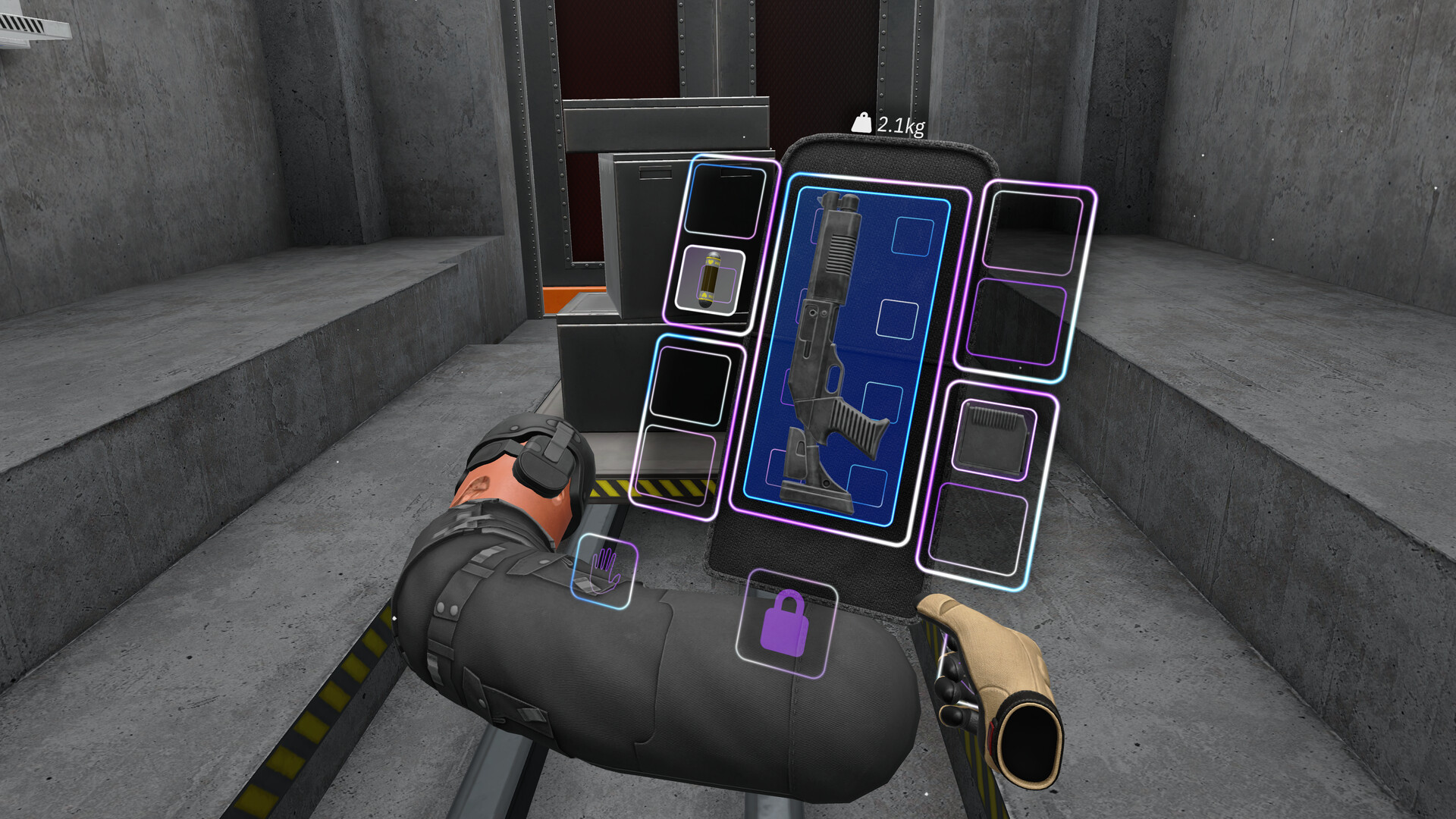
Official screenshot · Source: Steam store
The game launched on November 12, 2026, for Meta Quest 3 and Quest 3S at $39.99. A PC VR version is planned for the second half of 2027, with enhanced visuals, broader hardware support, and a modding framework expected later.
That release order is significant. The original Hot Dogs, Horseshoes & Hand Grenades became famous for its realistic weapon interaction, but it remained a PC VR title. H3VR2 changes that by building around the capabilities of newer standalone headsets.
| Quick fact | Details |
|---|---|
| Release date | November 12, 2026 |
| Available platforms | Meta Quest 3 and Quest 3S |
| Launch price | $39.99 |
| PC VR version | Planned for the second half of 2027 |
| Main mode | The Facility |
| Developer | RUST LTD. |
| Player character | The Handy |
| Enemies | Armed and armored hot dogs |
You can find the latest availability information on the official H3VR2 website, which includes links for Quest and Steam VR.
What is included at launch?
The centerpiece is The Facility, a single-player extraction mode. Players enter a procedurally generated environment, fight enemies, search for equipment, and decide when to leave. Extract successfully, and the gear and resources you recover can support future runs.
The structure is familiar to anyone who has played an extraction shooter, but H3VR2 gives it a distinctly tactile VR identity. You are not simply selecting a weapon from a menu. You physically handle firearms, load magazines, manage equipment, and deal with the consequences of carrying too much.
The Facility’s layout changes between runs, which prevents players from relying entirely on memorized routes. The objective is straightforward, but the risk increases whenever you find an especially valuable weapon or item.
| Launch activity | Best use |
|---|---|
| The Facility | Extraction runs, loot collection, progression |
| Certification Range | Learning weapon operation and reloads |
| Sandbox | Testing firearms and experimenting freely |
| Arcade challenges | Improving speed, accuracy, and scores |
| Weapon customization | Building and adjusting equipment |
| Armory progression | Managing recovered gear and upgrades |
This variety matters because extraction games can become stressful if every session demands a high-risk run. The sandbox and training areas provide lower-pressure alternatives when you want to experiment rather than protect a valuable loadout.
The game also includes a progression system built around three resources or stats: metal, mustard, and meat. Their unusual names fit the game’s hot-dog-themed world, but they serve a practical purpose by supporting upgrades and longer-term progression.
Exact item values are best discovered naturally. The game’s systems encourage experimentation, and learning which objects are worth collecting is part of the appeal.
Why the gunplay is the main attraction
The strongest reason to follow H3VR2 early access is the weapon handling. The sequel continues the original game’s focus on realistic interactions, including distinct reload procedures, magazine management, ammunition behavior, and different handling characteristics across firearms.
This is not a shooter where every gun feels interchangeable. A pistol can demand a different rhythm from a rifle, while unusual weapons may require unfamiliar steps before they are ready to fire. Even small mistakes, such as failing to seat a magazine fully, can leave a weapon unusable at the worst possible moment.
A player experience report based on approximately 6.5 hours with the Quest 3 version praised the weapon detail and described each firearm as having a noticeably different feel. That is a player experience, not a universal performance benchmark, but it reflects the game’s central design goal.
| Gunplay feature | What it means in practice |
|---|---|
| Physical reloads | Insert, remove, and seat magazines by hand |
| Distinct weapon behavior | Firearms require different handling habits |
| Detailed ammunition systems | Ammunition and ballistics affect weapon behavior |
| Hand posing | Hands interact with weapons more naturally |
| Weapon customization | Attachments and adapters support experimentation |
| Certification Range | Practice before risking equipment in The Facility |
The game’s realism can also create a learning curve. Players coming from more traditional VR shooters may initially find the controls slow or finicky. That is intentional, but it means the training range should be treated as part of the experience rather than an optional tutorial.
A practical training routine
Use this sequence before committing to serious extraction runs:
- Pick one starting weapon and learn its complete reload cycle.
- Practice removing and inserting the magazine without looking down.
- Confirm that the magazine is fully seated before attempting to chamber a round.
- Fire controlled bursts or single shots to understand recoil and sound.
- Repeat the process with a second weapon that uses a different reload method.
- Try the arcade challenges to improve speed under pressure.
| Skill | Suggested target |
|---|---|
| Magazine insertion | Complete five successful reloads |
| Weapon transition | Switch between two firearms smoothly |
| Accuracy | Finish a challenge without rushing shots |
| Inventory access | Retrieve an item without losing awareness |
| Emergency reload | Reload while moving or under pressure |
The goal is not to memorize every system immediately. It is to develop enough muscle memory that your attention can remain on enemies, positioning, and extraction decisions.
Loot, weight, and extraction strategy
The Facility is built around a simple tension: every item you collect can help you later, but every item also makes extraction more important. Inventory capacity and carried weight prevent players from taking everything they see.
That limitation creates meaningful choices. A weapon may be more valuable than several low-impact items, while a lighter resource may be preferable if you are already carrying essential equipment. The player experience report described the over-the-shoulder backpack interaction as satisfying overall, although some inventory areas felt slightly fiddly.
Community reports and early player experiences should be interpreted carefully because launch patches may adjust hitboxes, performance, and balance. Still, the central lesson is useful: treat your inventory as a limited resource, not a bottomless storage container.
| Situation | Recommended decision |
|---|---|
| You find a high-value weapon | Compare its value with your current loadout |
| Your backpack is nearly full | Drop low-priority items before continuing |
| You are far from extraction | Avoid unnecessary detours |
| You need upgrade materials | Prioritize known useful resources |
| You are carrying too much weight | Consider extracting sooner |
| You are unsure about an item | Test or identify it in a safer context |
Early Facility tips
- Do not loot automatically. Take a moment to compare an item’s value, weight, and space requirements.
- Extract before greed takes over. A successful return with moderate loot is usually better than losing a full inventory.
- Learn the first area carefully. Procedural layouts change, but recognizing room types and routes still helps.
- Keep a reliable weapon available. Experiment with unusual firearms only when you can afford a mistake.
- Use challenges as warm-ups. They can improve handling before a high-stakes run.
- Upgrade capacity when possible. More inventory space expands your options during later expeditions.
The early preview also noted that some parts of the first level could feel corridor-heavy, while offices and warehouse areas offered more variety. That criticism came from a player experience with an early build, and the developer had already discussed improving variety in the opening environment.
Performance, platform differences, and future updates
One of the biggest surprises surrounding H3VR2 early access is that the Quest version runs natively on Quest 3 and Quest 3S. A player experience report described the visuals and weapon detail as strong enough to forget that the game was running on standalone hardware, with only one brief performance issue during recording.
That should not be treated as a guarantee for every player. Performance can vary depending on headset settings, software updates, recording, and the specific area being played. However, the launch platform is an important achievement given the original game’s demanding physics and rendering systems.
| Version | Availability | Expected characteristics |
|---|---|---|
| Quest 3 | Available now | Standalone VR version |
| Quest 3S | Available now | Standalone VR version |
| Steam VR | Planned for late 2027 | Enhanced graphics and wider hardware support |
| Modding support | Planned with PC framework | More flexibility for community content |
The development roadmap also points toward a long-term content plan. The developer has described the project as a single-player “pseudo-live service” model, with free additions such as new biomes, weapons, tools, enemies, and Facility content. Paid DLC is expected for some new modes, sandbox packs, and licensed content.
That approach makes the $39.99 launch price easier to understand, but buyers should still distinguish between confirmed launch content and future plans. Roadmaps can change, and upcoming features should not be treated as part of the product until they are released.
For Quest owners, the key buying question is simple: do you enjoy detailed VR weapon handling and methodical exploration? If yes, the current version offers a substantial core mode plus training, sandbox, and challenge activities. If you specifically want high-end PC graphics or mod support, waiting for the PC release may make more sense.
| Player type | Best choice |
|---|---|
| Quest 3 owner who enjoys VR shooters | Buy now and learn the systems |
| Extraction-game fan | Buy now if single-player gameplay appeals |
| Casual player seeking instant action | Start with sandbox and arcade modes |
| PC VR enthusiast | Wait for the planned PC version |
| Original H3VR fan | Consider the sequel for standalone access |
| Mod-focused player | Wait for the PC framework |
Is H3VR2 worth buying?
Based on the available launch information and early player experience, H3VR2 is a strong choice for VR shooter fans who value depth over instant accessibility. The Facility provides a compelling risk-and-reward loop, while the gun systems give every expedition a hands-on purpose.
The main caveats are the learning curve, the possibility of awkward inventory interactions, and the current limitations of the initial environment variety. Players expecting a fast, conventional shooter may find the reloads and equipment management demanding.
At $39.99, the game also sits above many arcade-style VR titles, but it offers more than a single short campaign. Its sandbox, challenge modes, progression, and planned free updates give it room to become a long-term platform for experimentation.
The most balanced verdict is that H3VR2 early access is worth considering now for Quest 3 and Quest 3S owners, especially those who enjoy realistic firearm simulation. Players waiting for PC VR enhancements should keep an eye on the planned second-half-2027 release instead of buying the Quest version solely for future mod support.
H3VR2 early access FAQ
Is H3VR2 early access available now?
The game launched on November 12, 2026, for Meta Quest 3 and Quest 3S. The phrase H3VR2 early access may refer to preview coverage or the game’s evolving launch roadmap, but the available release information identifies the Quest version as the current product.
How much does H3VR2 cost?
H3VR2 costs $39.99 on Quest at launch. Future paid DLC may include additional modes, sandbox packs, and licensed content, while planned biomes, weapons, tools, enemies, and Facility content are expected as free updates.
Can I play H3VR2 on PC VR?
Not yet. The PC VR version is planned for the second half of 2027. It is expected to include enhanced graphics, broader hardware support, and a framework for modding.
Is H3VR2 suitable for beginners?
Yes, but beginners should start with the Certification Range. The game’s realistic reloads and weapon interactions require practice, so learning a few firearms in a safe environment before entering The Facility will make early runs much more manageable.
Related Guides
H3VR2 announcement: New Guns and Extraction Gameplay
The H3VR2 announcement reveals a new VR shooting adventure with procedural missions, extraction gameplay, deeper gun handling, and more.
H3VR2 beta: What We Know About Testing and Release
Wondering about the H3VR2 beta? Here is what is confirmed about testing, platforms, gameplay systems, wishlists, and the expected release path.
H3VR2 preorder: Price, Release Date, and Buying Guide
Find the H3VR2 preorder price, Quest 3 release details, PC VR timeline, bonuses, and practical buying tips before purchasing.
H3VR2 quest: Complete Standalone Review and Guide
Our H3VR2 Quest review covers the Facility campaign, weapons, performance, extraction mechanics, price, and tips for new players.
H3VR2 coop: What Multiplayer Players Need to Know
Wondering about H3VR2 coop? Here is what is confirmed, what remains unknown, and how the extraction mode could shape future multiplayer.